Sunday, March 22, 2009

Apple warns you shouldn't take iPhone/iPods to bath or swim

That is obvious, of course. Not to take your mobile device or smarpthone into bath or swim with you, who would do such thing? ;-p

Unless you put on a waterproof case to your precious iPhone or iPods, you might take them with you to dip into water so you can continue hear your favorite tunes or won't worry about missing an important call. But even so, you should read Apple's recent technical note (via ZDNet) that says the device's warranty or AppleCare Protection will not cover any water damage.

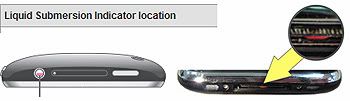
What's more, Apple has put an indicator technology inside just like in the MacBook line-ups so technicians can tell if the device has been submerged or not. Here are some parts of the technical note about the indicator:

The Liquid Submersion Indicator is triggered when liquid enters the iPhone or iPod. The indicator will turn red or pink when the device has been submerged in liquid.

You can tell if the Liquid Submersion Indicator has been triggered by looking directly down into the headphone jack. Either use a lighted magnifying glass, or angle the iPhone or iPod so light shines down into the headphone jack. At the base of the headphone jack, you should see what is normally a white or silver colored dot. Half of the dot becomes red (or a pinkish color) when the device has been submerged in liquid. iPhone 3G models also have a Liquid Submersion Indicator located on the bottom of the connector housing, just under the 30-pin dock connector. To view the indicator, use a lighted magnifying glass and hold the iPhone 3G so that you can view the center bottom of the dock connector housing. A full red dot will appear if the indicator has been triggered.

Go to the technical note page to see where the rest of those indicators are positioned at your iPods, so will you now have a second thought of bringing your iPhone/iPod to the bathroom to turn it into your own little karaoke box? ~LOL~

Microsoft throws IE8 as a life-saver in the tightening web browsers war

Did you notice Microsoft finally launched IE8 just few days ago? Not much of a buzz was generated from the official release of Internet Explorer (IE) web browser, in fact I even noticed more news about the RC (Release Candidate) or Beta version of IE before this rather than the final version.

There are two simple reasons for that; one is because the final version of IE8 is not that different from the previous beta versions, second is because IE8 shows no great improvements compared to the other web browsers in the market today.

For the software giant, it doesn't take a rocket scientist or conduct a market research to know that its IE web browser is losing market shares. Personal computer users at home and especially for those who can't live without a web browser & internet connection like bloggers, they have left IE for good ever since other competitors like Firefox and the latest Google's Chrome got more to offer.

One particular reason of why many web browser users are leaving IE is because of its speed, IE is like a turtle in the speed race against the others. In fact, according to JavaScript rendering tests run by Computerworld, the final version of IE8 is only slightly faster than the browser's Release Candidate 1 (RC1). Computerworld ran the SunSpider benchmark tests in Windows XP three times for each browser, then averaged the scores. Here's the list of the results:
  1. Google's Chrome is about more than four times faster than IE8
  2. Coming in second was Mozilla's Firefox v3.0.7 at 59% faster than IE8
  3. Followed by Apple's Safari v3.2.2 for Windows was 47% faster
  4. Opera v9.63 came last but still 38% faster than IE8
However, Microsoft seems to continued downplay benchmarks such as SunSpider and says this with denial from the truth: "Internet Explorer 8 is one of the fastest browsers on the market today, beating other top browsers in page load time on almost 50% of the 25 top comScore Web sites."

James Pratt, a senior program manager for IE, acknowledged that the differences were slight and that speed is important to users: "We know that speed is critical to people who are using browsers today, and we recognize that users have a choice when it comes to browser."

Speed is very essential for people who live in the internet, just like Kevin C. Tofel from jkOnTheRun has said in his blog: 'If the “Achilles Heel' is speed, I have to pass. I simply live way too much in a browser, so speed is a premium that I have to have for productivity purposes. Likening the browser to an OS, I need to move through the environment so that my tools don’t get in the way."

2313018061_e45de2f773When Microsoft was claiming that IE8 is faster than Chrome v1.0, it didn't take long for Google to released a faster beta version of Chrome. According to Chrome product manager Brian Rakowski, the beta is up to 35% quicker than the previous version of Chrome. Other new features include being able to drag tabs to get a side-by-side view, form autofill, autoscroll and a full-page zoom.

IE8 may be a slowpoke, but it does however offer some good points like security. Many business users and enterprises are still using IE up till today, and personally I've experienced myself how local banks here in my country are still insisting their customers to use IE for on-line transactions. But is it true that IE8 is more secure than older versions or it's competitors?

In the latest CanSecWest's PWN2OWN contest, a contest where researchers who successfully hack into computer systems provided will be rewarded with money and the hacked machine, found out there's a "brilliant" IE8 bug. According to Terri Forslof, the manager of security response at PWN2OWN sponsor TippingPoint, another researcher later broke into a Sony laptop that was running Windows 7 by exploiting a vulnerability in Internet Explorer 8. "Safari and IE both went down," she said in an e-mail.

But among the hacked web browsers in the contest, Apple's Safari is the fastest to went down. Charlie Miller, the security researcher who hacked a Mac in two minutes at last year contest, improved his time by breaking into another Mac in under 10 seconds! "I gave them the link, they clicked on it, and that was it," said Miller. "I did a few things to show that I had full control of the Mac."

This year's PWN2OWN also features a mobile operating system contest that will award a $10,000 cash prize for every vulnerability successfully exploited in five smartphone operating systems: Windows Mobile, Google's Android, Symbian, and the operating systems used by the iPhone and BlackBerry.

Miller said he won't enter the mobile contest. "I can't break them," said Miller, who was one of the first researchers to demonstrate an attack on the iPhone in 2007, and last year was the first to reveal a flaw in Android. "I don't have anything for the iPhone, and I don't know enough about Google."

On the other side; Mozilla also posted the first beta release of Fennec, its mobile version of the Firefox Web browser. The Fennec v1.0 Beta 1 release currently is only available for Nokia N810 Internet Tablet, that runs Nokia's Maemo open source operating system. One powerful features in Fennec is the TraceMonkey JavaScript compiler, which promises to dramatically speed up many aspects of mobile browsing.

Back to the IE8, Microsoft is touting it as the answer to the call of challenge from competitors, and filled IE8 with new features and improved securities, here are some of them:

Compatibility View: IE8 will automatically tell web pages that won't rendered properly by showing a broken page icon at the side of the address bar. Users can manually turn on/off this feature.

161533-ie8_compatsettings_original

Accelerators: Lets you map directions, translate words, email your friends, and more in just a few mouse clicks.

D_screenshot_accelerator

InPrivate Browsing: Browse the web without saving your history with Internet Explorer 8's InPrivate Browsing. Works like the Chrome's incognito window feature.

Screenshot_privatebrowsing

Web Slices: Keep up with changes to the sites you care about most. Add a Web Slice and you won't have to go back to the same website again and again for updates on news, stock quotes, online auctions, weather, or even sports scores.

D_screenshot_ebay

Search suggestions: Search smarter with detailed suggestions from your favorite search providers and browsing history. See visual previews and get suggested content topics while you type in the enhanced Instant Search Box.

Screenshot_search

SmartScreen Filter: New security features help to protect you against deceptive and malicious websites which can compromise your data, privacy and identity.

Screenshot_smartscreen

Microsoft's IE8 right now only available through on-line download at its official website, Microsoft hasn't specified to push IE8 via Windows Update service yet. And Microsoft won't confirm when the final version of IE8 will be available for Windows 7, but it's expected to show up in the next public release for Windows 7.

Sources are from:

Tuz, the new Linux mascot

Without bringing in too much alarms about news from Linux world, or to attract too much noise from the "hankering" Linux fans, I think it's fair enough to let you know a little about the new mascot Linux: Tuz.

Ladies & gents meet Tazzie Tux, or in short called as Tuz, the mascot for January's Linux conference in Australia, which was held in Tasmania and where the show's annual charity auction was dedicated to raising funds to research devil facial tumor disease (DFTD).

Tazmanian Devil; the meat-eating marsupial that can only be found in the Tasmania-Australia currently faces extinction by a transmittable face cancer disease, the Linux kernel team is trying to bring awareness to the animal's plight. After the conference, the Linux creator Linus Torvalds decided to insert Tuz image into the kernel.

Jonathan Corbet, a Linux kernel contributor, wrote this on his Linux Foundation blog: "There are a lot of reasons why developers create open source software. Beyond the fact that it's simply fun, many of us are motivated by a desire to make the world a better place. The strong support in the development community for causes like the Tasmanian devil shows that this desire to improve the world goes beyond the creation of great, free software. It's something we can all be proud of."

Sources are from PC World & Wikipedia.

Saturday, March 21, 2009

Dev-Team: yes, the iPhone OS 3.0 is jailbreakable

It's not that long and it goes without saying, just like what those smart guys at iPhone Dev-Team have said and reassured us all in their blog just a day after Apple unveiled iPhone OS 3.0 that the new software update is indeed jailbreakable.

For those who have jailbroken their precious iPhone with the newest 'yellowsn0w' PwnageTool, the Dev-Team warns that you should not do the upgrade or you will lose 'yellowsn0w' and unable to revert the baseband to get it back.

Show some dignity will you (jailbreakers) people? And restraint those "itchy update fingers" for awhile! ~LOL~

Apple raises the competition bar with iPhone OS 3.0 (part. 2)

On the previous post, I was talking about the new features in iPhone OS 3.0 that are more user-oriented, but the real deal of the software update coming in summer this year is the nearly over 1,000 new APIs (Application Programming Interface) in the SDK (Software Developer Kit) 2.0 which is prepared by Apple for software developers to play with.

But why is the new SDK 2.0 for iPhone OS 3.0 is so important? Well, I don’t know if Apple or Steve Jobs have actually foreseen this themselves; but the centralized and managed distribution to offer apps for iPhone/iPod Touch which known as App Store is phenomenal. The facts speak for themselves.

At the iPhone OS 3.0 preview, Apple's VP of iPod marketing Greg Joswiak started the event with the announcement of the official figures: 13.7 million iPhones sold through 2008, 17 million iPhones (including the first gen) in total and 800,000 downloads of the iPhone SDK so far. And let’s not forget there are over 800 million iPhone apps downloaded from App Store, and the number is growing bigger every day thanks to both free and cheap priced apps.

The bottom line; App Store is pushing the sales of iPhone and iPod Touch worldwide, the same effect like what iTunes has done for iPod sales.

Surely, Apple and third party software developers are enjoying the benefits from App Store. But iPhone users are also reaping the fruits of well breed and feature rich apps offered at App Store, as a matter of fact one of the main reasons for most users to buy the iPhone is because of this.

So far those behemoth numbers above are achieved with first gen iPhone SDK, can you begin to imagine what kind of apps to be made from the new SDK 2.0 with over 1,000 new APIs in it? Apple invited some software developers and partners at the iPhone OS 3.0 preview, and they all were showing the possibilities of what their apps can do with the new software update. And that’s just an advanced preview, only the beginning of what’s more to come.

I can’t possibly mention every one of the 1,000 new APIs, and discuss them one by one. So I’m going to just quickly take on few of the most important ones, let’s get to know them shall we?

Push Notification

Push not previewPush Notification is the long promised feature in iPhone OS 2.0, and also it is Apple’s answer to requests for multitasking or background process. During the preview, Apple said Push Notification only eats 23% of iPhone’s battery life, compared to the 80% drop in other mobile platforms (like IM app running in the background on Windows Mobile). In other words; Apple believes Push Notification is the future of multitasking.

If users run an app with Push Notification support, the app maintains connectivity via Apple’s server. When users exit the app, the server pings the iPhone with notifications so the OS can display them to the users. The notifications are called badges and there will be three types: badges overlay an app icon on iPhone home screen (like the red unread message count icon over Mail app), sound alerts, text alerts that visually appear like text message alert.

The actual app never run during the entire process, and will only launched when the users choose to reach the notification, like for an example when the user is replying text message from a notification of an IM app.

In-App Purchase

In-app purchaseApple is planning to make the App Store less crowded and messy with this new system called In-App Purchase, which lets software developers to write an app with extra contents that can be purchased from within the app itself. For an instance; users can buy new e-books from an e-reader app, or new levels when finished playing Guitar Hero, or like the demoed The Sims 3 which lets users buy items for their virtual character using an in-game store interface.

Apple will use the same revenue sharing in App Store for this new system: 30% for Apple and 70% for the developer. Sounds promising but on the down side; cunning, nay let’s just say clever software developers can use the new In-App Purchase for their own greed and get more out of the 99 cents limit sales price from users who bought their apps.

But on the bright side, Apple make a rule that free apps can’t use the In-App Purchase, so if it’s for free then everything inside is all free too.

P2P connection

Lifesaver accessoryPeer-to-peer (P2P) in OS 3.0 is a new system built on Apple’s Bonjour technology which lets iPhone communicate with other iPhones or iPod Touch in the surrounding area. The iPhone will use Bluetooth, not WiFi to make the P2P connection, so long distance is limited.

A Johnson and Johnson company LifeScan showed off a blood sugar app that uses the iPhone to process user's blood glucose level and keep track of it both on the device, and by sending the data to LifeScan's servers. The P2P is intentionally put in the iPhone OS 3.0 for gaming purpose, but Apple said it can be used for business like sharing confidential files or share data across multiple platforms.

Direct accessory access

What LifeScan demoed also shows Apple’s new policy in the SDK 2.0 that let software developers access third party hardware attached to the iPhone. A special app can be written to work only with a specific hardware accessory, a tailor made app for accessory makers.

For examples are like LifeScan’s device mentioned above to process blood, and a speaker manufacturer for the iPhone can write an app to include equalizer or any other specialized features that particular speaker only have.

Turn-by-turn directions / advanced GPS

Advance gpsApple is going to change the entire Maps app to become API-driven, accessible by software developers to use it in their own apps. Since the Core Location is to include turn-by-turn directions and can be build into other apps, iPhone OS 3.0 will make the powered iPhone as an advance GPS device.

However, Apple warned software developers to "bring [their] own maps" in turn-by-turn navigational applications because of licensing reasons.

iPhone OS 3.0: developers friendly & more satisfied users

All in all, the iPhone OS 3.0 is filling in all the blanks left in previous software. Current users are somewhat dissatisfied with iPhone limitations, not just users but also software developers who felt restraint with many iPhone SDK restrictions, so Apple is trying to address all that with the new SDK 2.0 along with the new software update.

I’m not trying to promote iPhone or Apple in any way, but it’s so hard not to see how far the iPhone has gone or let’s say will be with the upcoming iPhone OS 3.0 in summer this year. In a very short time frame, roughly since eight months after App Store introduced, iPhone has beaten the longer existed other mobile platforms in the industry: Palm OS, Windows Mobile, BlackBerry & Symbian OS. And instead of sit back and enjoying the fruits of their hard works, like those other mobile platform makers did in the past, Apple is raising the competition bar with the new iPhone OS 3.0 not long after the OS 2.x versions were released months ago.

By creating the platform and ecosystem that are both friendly for software developers, encouraging them to create high quality apps and accessories for the iPhone, these all will mean more satisfied iPhone users in the future. Palm know this, there were many apps and accessories made for Palm PDAs & smartphones, propelling the success of the old (and now abandoned) Palm OS. Can Palm repeat the success again with its upcoming webOS™ and the Prē™? They better be…

I’ll be talking about the new iPhone OS 3.0 impact on other mobile platforms in the next post, so stay tune! ;-)

Friday, March 20, 2009

Ed Colligan: Palm to use webOS beyond Prē base

Palm's latest report of its total revenue in the third quarter of fiscal year 2009 doesn't sound encouraging enough for the company that has the most talked about smartphone of this year: the Prē™, Palm smartphone revenue was $77.5 million, down 72% from the year-ago period. Read the complete Palm Q3 FY09 results at Sammy's post.

But despite the huge net loss of $98 million on revenue of $90.6 million, down from $312 million a in the same quarter a year ago, Palm CEO Ed Colligan said the company is well positioned to launch the Prē™ on time: “We are under no illusions about the hard work that remains with bringing the Pre™ to market." And he added that “I have never had more confidence in Palm’s ability to bring a new product to market on time and at scale.”

Even though knowing the Prē™ is to be the savior of the ailing Palm, the company still keep tight lips about the launch date of the handset, but said the device and its software were “being polished up” and being certified from Sprint as the company prepares to ramp up manufacturing. “Right now we’re 100% focused on getting the Pre launched and the Sprint product out the door,” said CFO Doug Jeffries.

So much info for all of us who's been waiting for the Prē™, but still there are some interesting points delivered by Ed Colligan as reported by ZDNet blogger Larry Dignan:
  • The company needs seamless execution on the Prē™ launch.
  • Palm is “working hard with developers to get applications ready at launch” and “aligning marketing efforts with Sprint.”
  • Palm wasn’t prepared to disclose a European partner for the Prē™, but the company has some “excellent options.”
  • The company plans to establish a webOS™ ecosystem that goes “well beyond our base.”
  • Palm wasn’t going to discuss its cash burn situation in the fourth quarter, but said its latest move to raise capital gave the company enough headroom to launch the Prē™.
The underlying statement is: Palm will use webOS™ for future devices beyond their current base (Prē™). Jeffries said the company’s cost cutting and the launch of the Prē™ –along with its webOS™– will “greatly improve” performance.

IMHO Palm is putting a lot of stocks into webOS™ (and also the Prē™), it's gonna be "do or die" moment for Palm when the Prē™ is launched, but that sure is make all of us pumped up right?

Thursday, March 19, 2009

HTC Magic got the new Android's circular zoom feature

Apparently, iPhone is not the only smartphone out there who'll get new and enhanced features. Google was also been busy adding new features into the latest Android-powered HTC Magic, and with the launch date of HTC Magic is getting closer, leaked new informations can be almost found in daily basis.

Phandroid has found out of Android's new feature that will launch with HTC Magic: a circular touchscreen wheel (Scroll Wheel Zoom) allowing for the smooth zooming of websites, pictures and more. The phone was examined in an interview on CNET France...

As we all have know about it before; there's no physical keyboard in HTC Magic and this would be the underlying difference between the Magic and the G1. CNet France writes: This new version of the Google Phone, designed by HTC abandon this mechanical keyboard on the HTC Dream and enjoy the new version of Android: Cupcake.

The HTC Magic will be marketed exclusively by SFR in late April at a price of 99 euros (with 50 euros included for the subscription SFR) and will be bundled with a microSD card to 8GB.

A MacNetbook runs Windows/Linux? Definetely a knock-off!

Top crown macnetbook

As if we're not being teased enough with the rumors of a cheaper version of MacBook, here's another one that's definetely fall into the knock-off category. A China-based computer company called Top Crown is offering its WF188 netbook with a flipped Apple logo on the top cover, making potential (yet foolish) buyers blindly believe they're buying "MacNetbook". *chuckles*

Here's the list of this alledgedly "MacNetbook" specification if you still interested and haven't jump to the next post already:
  • Via Nano 1.3GHz processor
  • Up to 2GB DDR 2 RAM
  • Via Chrome 9 HC3 integrated graphics card
  • 160GB 2.5" SATA HDD or 64GB SSD
  • 10-inch screen with 1024x576 resolution
  • 802.11b/g Wi-Fi, Ethernet, Bluetooth, 3G/HSDPA connectivity
  • Three USB ports, VGA-out, SDHC/MMC card reader and ExpressCard slot
  • Windows XP or Linux OS
If any of you are planning to go to Hong Kong or Shenzhen in near future, perhaps you can pick one of this "MacNetbook" for me cuz I've been dying to own a MacBook Air since like forever, and because of one or two things that are currently happening then I guess this will do just fine. ~LOL~

Sources are from CNet & Gizmodo.

Apple raises the competition bar with iPhone OS 3.0 (part. 1)

For the past 24-hours, the blogosphere is flooded with news surrounding the new iPhone OS 3.0 software, which just been introduced by Apple on Tuesday at the company’s Town Hall in Cupertino campus.

There’s no doubt most of you, especially you iPhone owners, were following the live coverage at tech blogs all over the net. You were all staring anxiously at your monitor screen, waiting impatiently one after another new features being unveiled, hoping that each of our own wish list of features will come true in the new iPhone OS 3.0 software.

But unfortunately, even though Apple did deliver most of the missing features that should be in the first place since iPhone was introduced, not all of the users’ wish lists are granted. Including two of the 6 features that I predicted from my last post, but I’m going to discuss them later at the bottom of this post.

So if you’ve missed the iPhone OS 3.0 preview, or maybe you fell asleep half way through the preview, or just maybe you can’t get enough of the upcoming software for your iPhone; let’s run them down again by the most compelling new features:

Cut, Copy & Paste

Yes, finally! General iPhone users can now stop whining about how their cutting-edge mobile device can’t even do one of the most basic features in today’s smartphones, and not just that, Apple also gives extra functionalities to this feature.

Users can cut, copy and paste for text and photos. The new software allows users to select multiple photos and send them through Mail, works the same way for text messages too. The feature goes for iPhone’s Safari as well, can be used for copying URLs or the content of the web.

To start the feature; double tap the screen to show the option to cut, copy and paste. Then drag the start and end point over the text or photos you want, double tap again or tap on the action button. It is said, you can use a large rectangle that can be moved around to include the whole paragraphs at a time.

Cut and paste

MMS

Another basic feature for nowadays smartphone finally will become available too in iPhone 3G, but not for the first generation of iPhone due to hardware limitation. Not much to tell right now besides that you can now send and receive multimedia messages (photos, videos, voice recordings, etc).

And yet again, Apple gives MMS a cool ability: send messages in the background, meaning users can type the second message while waiting for the first one to send. Also the ability to forward and delete multiple messages. Not to be forgotten; the iPhone OS 3.0 allows users to undo or redo the typing.

Mms abilities

Spotlight

This is one new feature that no one ever see coming, in fact Apple seems listening to the users’ complaint about how troublesome it is to flick upon pages of apps or notes just to find the one they’re looking for. So Apple decided to bring the Spotlight search on Mac OS X into iPhone OS 3.0, it is accessible by flicking to the right from iPhone home screen, the Spotlight page is indicated by a magnifying-glass icon.

User will be presented with an open search box, typing in the key words will search for specific emails, apps, contacts, and any data within apps. When Spotlight can’t find the emails you’re looking for, it’ll continue to search the mail server over the net. The iPhone’s Spotlight works as mini universal search engine, and also act as a quick app launcher. Nifty, yet pretty awesome.

Spotlight screenshots

Voice Memo

Apple is including an app that lets you record voice memos, trim the records, and then sent them through Mail or MMS.

To tell you the truth, it feels like Apple is taking out an app which 3rd party developers can make for a living by include it as a native feature in the iPhone OS 3.0, but then at the same time Apple is like giving users a good reason to make the most of the new MMS feature. Cheers or boo? Aw, shucks. Whom I’m foolin’ rite? ~LOL~

Voice memo screenshots

Landscape keyboard mode

Apple finally agrees that writing long emails or text messages in normal mode is indeed so tiresome, so now the iPhone OS 3.0 will permit landscape keyboard in key apps such as: Mail, Stocks, Notes and Messages. Happy? Oh, you betcha! ;-D

Landscape keyboard mode

The little tid-bits
  • A2DP Stere Bluetooth; not available for first gen iPhone due to hardware limitation.
  • Tethering; will be built into iPhone OS 3.0 but depends on wireless carriers to let this feature available or not.
  • iPod Touch (2ndGen); will get unlocked Bluetooth and must pay $9.95 to get the software update.
  • The iPhone OS 3.0 software will be released around summer this year.
There are many other new features that I couldn’t possibly list all of them here, but you can head on to Engadget’s page for the comprehensive features that will be in iPhone OS 3.0 software update. Engadget has done a great job in separating the features based on functionalities for users and developers.

And as for the feature that is strange enough not to be included in the new iPhone OS 3.0 is the theme option to customized the look and feel of your lovely iPhone, one of the compulsive reasons why users all around the world want to jailbreak their iPhone. But perhaps Apple will shed more light on the ability to change theme when the iPhone OS 3.0 SDK has reached final version, until then jailbroken iPhones are going to be growing bigger in numbers no matter how tight the security is in the new software update.

Lastly, the second missed feature that everyone have been expecting for in iPhone OS 3.0: the multitasking ability, it’s not exactly not present but Apple decided to use the long delayed Push Notification from iPhone OS 2.0. I’m going to get more into this Push Notification feature in the next post, so stay tune! ;-)
The iPhone OS 3.0 screenshots are courtesy of Apple Insider & Engadget.

Wednesday, March 18, 2009

Treo Pro makes an appearance in the ER episode

One eagle eyes reader of Engadget has informed of a cameo by Palm's Treo Pro in one of the latest ER episodes, it was used by Nurse Hathaway.

The scene where Treo Pro is being used include the famous George Clooney as Dr. Ross, and what is Laura June from Engadget says about the Treo Pro: "That phone looks hot!" ;-D

Agreed, signed, sealed and delivered! Go to the Engadget's page to see the other screenshot.

Tuesday, March 17, 2009

HKPUG show their love for Palm OS at farewell party

Since Sammy is still in New York, then I'll post this refreshing quickie news from PalmInfoCenter about a farewell party for Palm OS held by HKPUG (Hong Kong PDA User Group).

"Members brought along their Palm OS devices from over the years and swapped stories and bits of data over IR. Nearly every Palm OS powered device from the Pilot 1000 to the Centro was represented and most all of them were still in good working order."

Visit PalmInfoCenter page to see more pictures of the event, and bring up once more the good ol' memories of the Palm OS devices you own in the past (or still have).

Another good side of the news is that the love for Palm also present at Asia regions, and had created quite of fan base even up to today. Palm should acknowledge this, and utilize any mean necessaries to deepen its root into the heart of Asia, outside of Palm's own home. This could really help to revive Palm back, if just Palm plays the right cards. So Palm, how about unlocked Prē™ for us here in Asia? ;-)

We are "to fall in love" with Dell's Adamo?

Yup, that is Dell's intention when the US-based computer manufacturer company finally starts selling its first thinnest laptop line-up: the 13.4-inch Adamo.

The name Adamo itself is derived from a Latin word: "adamare", which translates into "to fall in love".

But with price tag over $1,999 for taking Adamo home with you, it's really not a cheap love. So clearly Adamo is not for everyone, according to Dell's statement: Style-minded people who place a premium on precision craftsmanship and design can now add Adamo to their list of must-have items for 2009.

"Great design needs to be timeless and evoke emotion in people”, said Alex Gruzen, senior vice president of Dell’s consumer products. “While a premium computing experience was assumed for Adamo, the intent was for people to see, touch and explore Adamo and be rewarded by the select materials and craftsmanship you would expect in a fine watch.”

Dell is planning to make Adamo as the flagship in a line of products created to disrupt the personal computing space with the combination of new design, aesthetics, personalization choices and sought-after technologies. “The Adamo laptop is a showcase for this commitment and a flagship product that will draw buyers to the brand," said Rob Enderle, Principal Analyst, Enderle Group.

The Adamo thin body quickly draws comparison to the champion holder in the thinnest laptop category: the MacBook Air (MBA), and Dan Ackerman from CNet was lucky enough to get a hold of Adamo in first of the line and make a quick comparison with MBA. Here's his take based on the early comparison: "The tapered Air is thinner at its narrowest point, but slightly thicker at its widest point. In either case these are both very slim systems."

You can check the hands-on gallery at this CNet's gallery link, and also see the official pictures at Engadget link.

Adamo compared air
The $1,999 price tag will get you the base model of Adamo with these specifications:
  • Intel® 1.2GHz Core 2 Duo U9300
  • 2GB DDR3 RAM
  • 13.4-inch 16:9 HD display
  • 128GB SSD
  • integrated graphics (Intel GS45 with 256 MB)
  • Draft-Wireless N
  • Bluetooth 2.1
  • Mobile Broadband* option
  • Up to 5+ hours of battery life (preliminary)
  • 2 USB ports, 1 USB/eSATA combo port, Display Port, RJ-45 port
  • Genuine Windows Vista® Home Premium Edition SP1, 64-bit
  • A chassis milled from a single piece of aluminum featuring precision detailing and a scalloped backlit keyboard
  • Striking high definition edge-to-edge glass display
  • Available in Onyx (black) and Pearl (silver-white) colors
While for a whooping $2700 price tag will get you a slightly higher model with 1.4 GHz SU9400 processor, 4 GB of memory and wireless HSPA broadband. This scenario sounds familiar, reminds me of the MacBook Air with 128GB SSD option eh? Meaning; still way too pricey for a cheap guy like me. ~LOL~

Available for pre-order today at www.adamobydell.com and shipping worldwide starting March 26, 2009, Adamo will be available online for purchase in 24 countries including U.S., Canada, Mexico, Brazil, U.K. France, Germany, Ireland, Italy, Netherlands, Spain, Russia, Sweden, Switzerland, UAE, ANZ, China, Honk Kong, India, Korea, Malaysia/Singapore, Japan, and Indonesia (yay! ;-D).